Hidden Gems
Curiosities
Cannonballs embedded in facades, art installations, and the thinnest building in the world — Turin's hidden quirks and unique charm.
Cannonballs
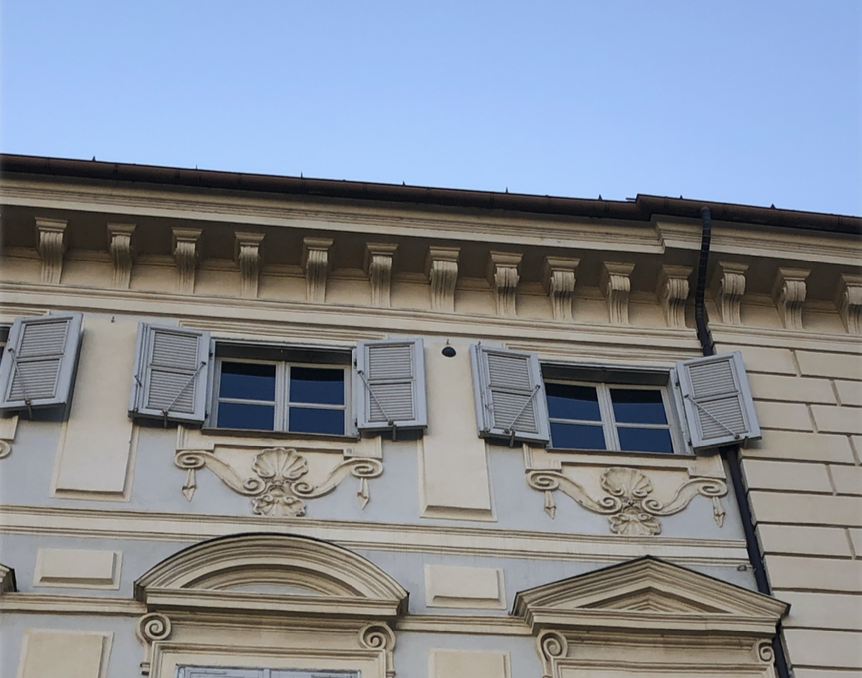
Scattered across Turin's buildings, these cannonballs are historical remnants of the sieges of 1706 and 1799. Embedded in facades, they commemorate the city's resistance against French and Napoleonic forces. Rather than damage, they have become symbolic "monuments" of survival. They can be found in places like Monte dei Cappuccini, Piazza San Carlo, Palazzo Saluzzo Paesana, and the Church of San Filippo Neri. Together, they form a unique open-air memory trail of Turin's military past and resilience.
Eco Installation
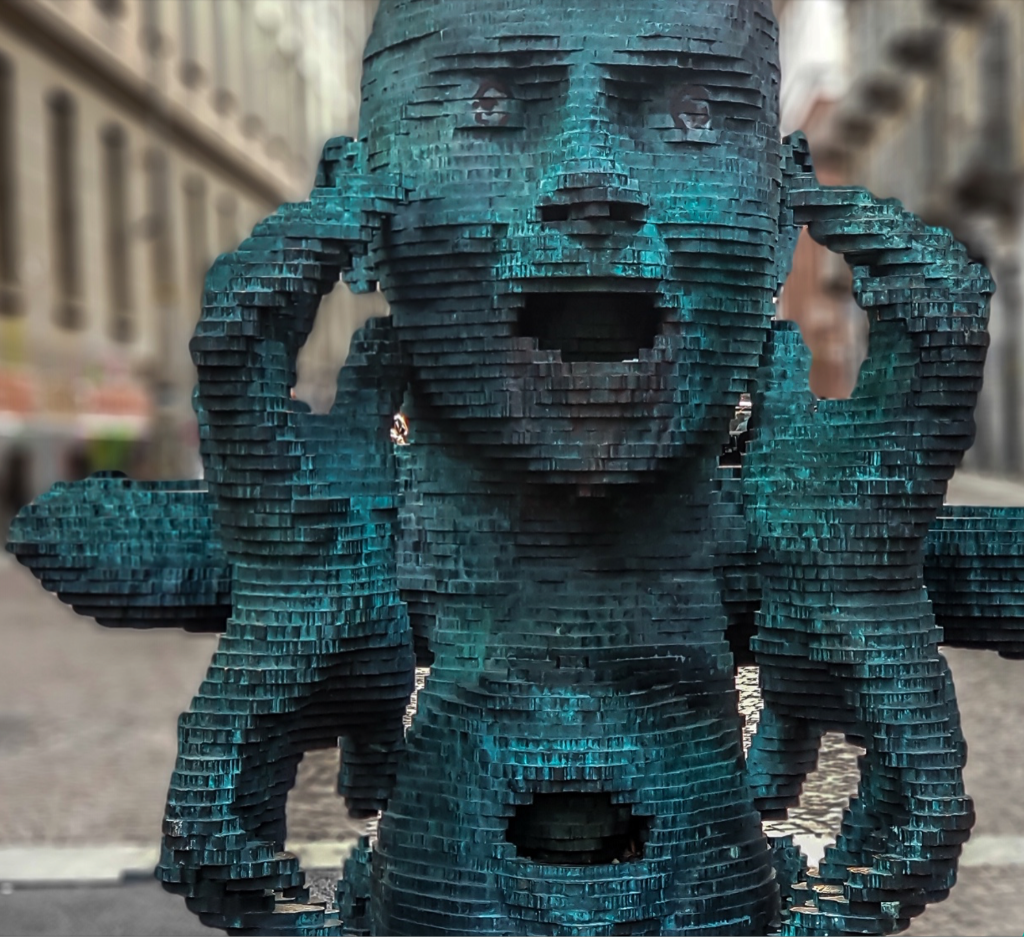
"Eco" is a contemporary artwork by Marc Didou near the Mole Antonelliana. It features two sculpted heads amplifying sound through their hands, creating a distorted communication effect. Hidden water mechanisms produce audible sounds, though no visible source exists. The installation reflects modern communication overload and how messages can lose clarity in today's media-saturated world, encouraging reflection on perception, noise, and meaning.
Christopher Columbus Finger
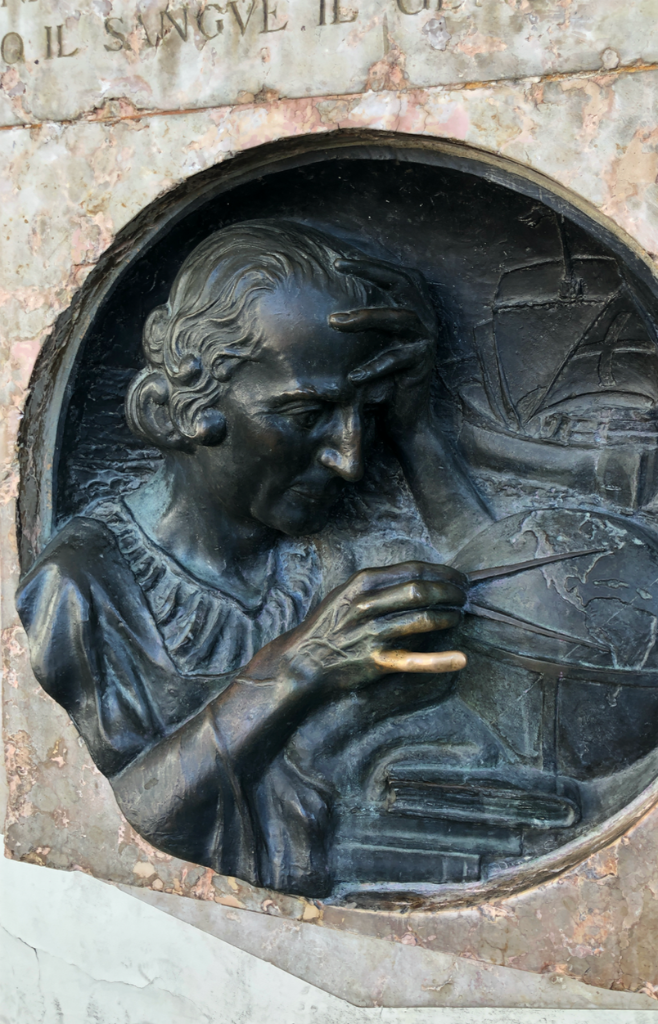
In Piazza Castello, under the arcades of Turin's Prefecture, lies a curious local tradition centered on a bronze medallion depicting Christopher Columbus. The relief shows the explorer with an unusually prominent little finger, which has become polished over time from countless visitors rubbing it for good luck. According to popular belief, touching the finger brings fortune, especially to students preparing for exams. This ritual has become deeply embedded in Turin's urban culture. The statue's finger has even worn down and required replacement due to constant contact. It is a small but iconic symbol of the city's blend of legend, superstition, and everyday life.
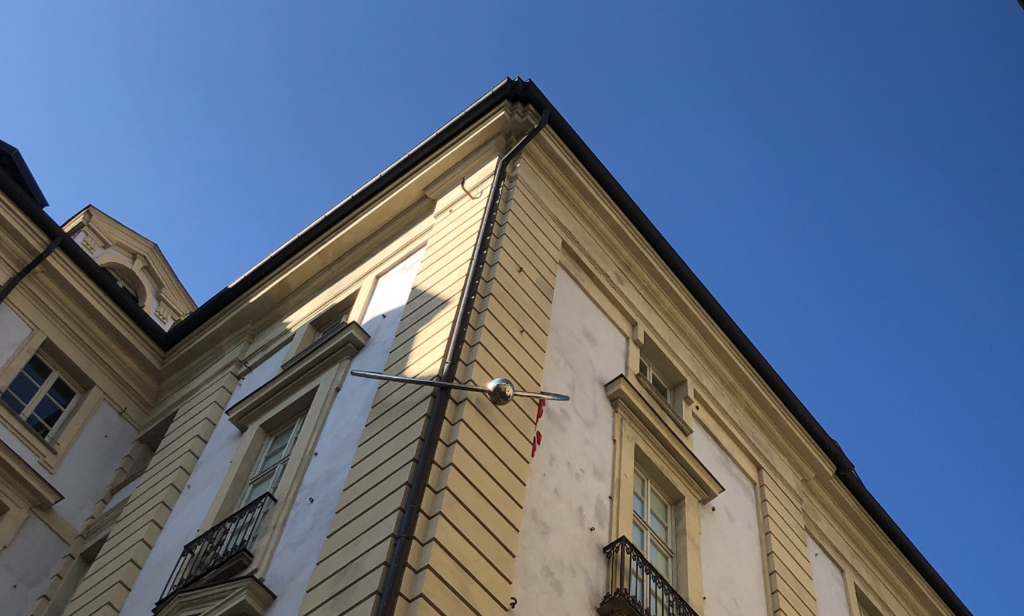
Palace with the Piercing
The so-called "Palace with the Piercing" is a modern art installation integrated into a building façade in Piazza Corpus Domini. Known officially as Stolen Kisses, it features a large circular opening that appears to pierce the structure at the fourth floor, creating a striking visual effect in Turin's urban landscape. Added as a temporary artwork in the 1990s, it became permanent due to its popularity. Coloured details resembling red and blue drips are interpreted symbolically, sometimes seen as representing social contrasts between wealth and poverty. The installation has become a well-known contemporary landmark blending art and architecture.
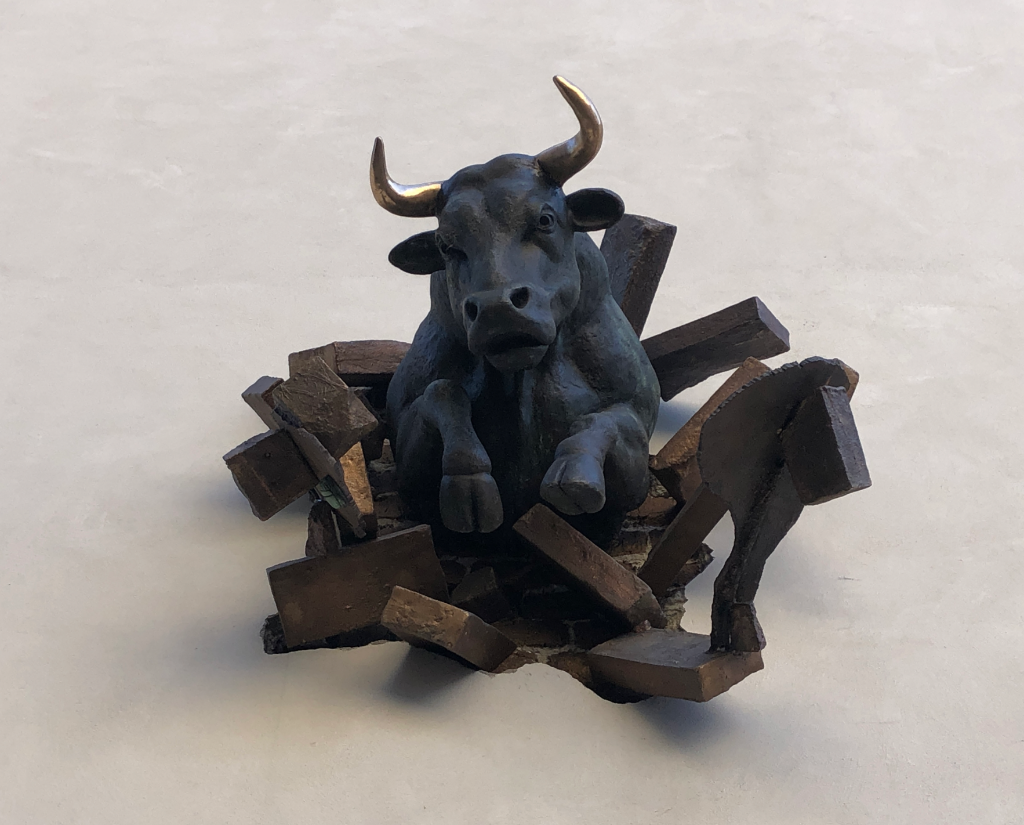
T'ORO
T'ORO is a contemporary art installation located in Via delle Orfane, created by artist Richi Ferrero. It depicts a bull—the symbol of Turin—emerging forcefully from a wall, with golden horns as a striking focal point. The work represents both tradition and transformation, symbolising the city's strength, resilience, and ongoing evolution. The bull appears frozen at the moment of breaking free, suggesting a dynamic tension between past and future. Positioned in the historic Quadrilatero Romano, the piece connects Turin's ancient identity with modern artistic expression, reinforcing the city's reputation for blending industrial heritage with creative innovation.
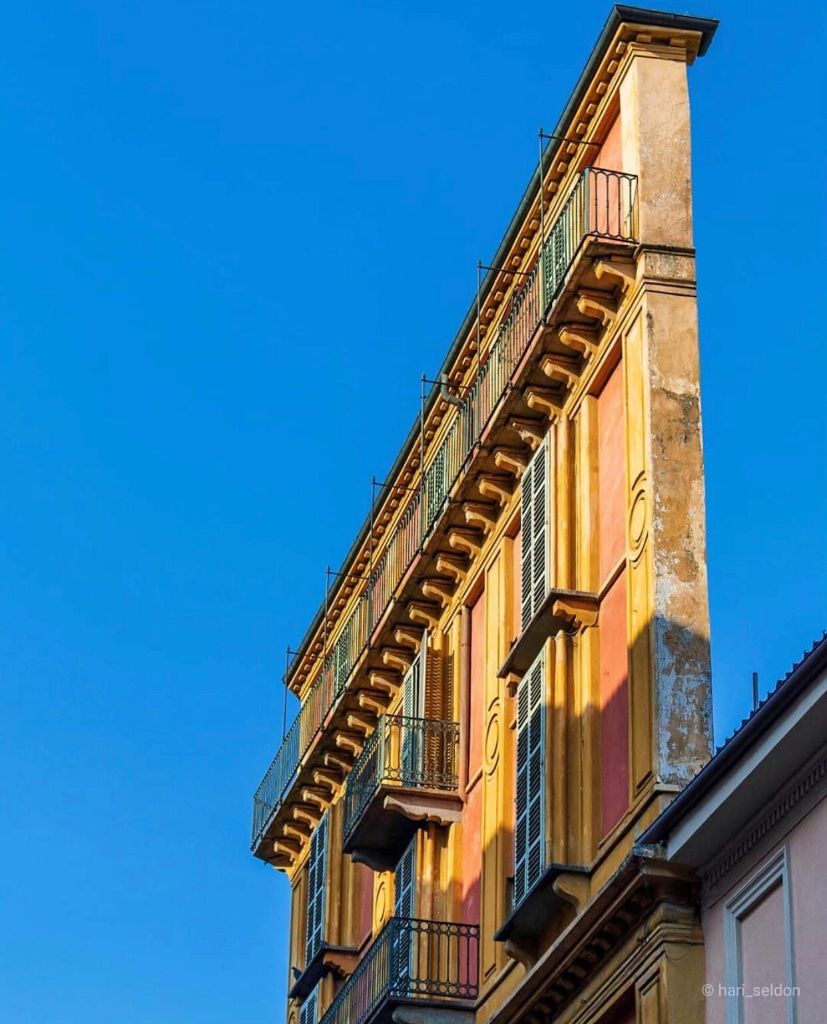
Casa Scaccabarozzi (Fetta di Polenta)
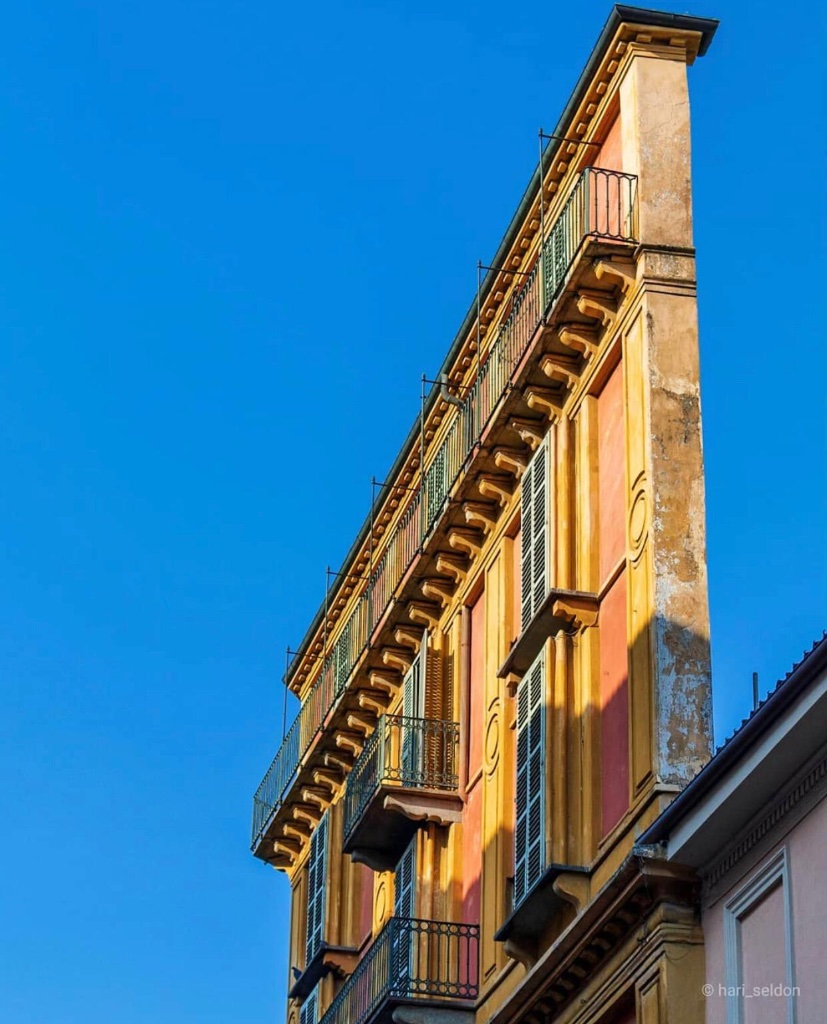
Casa Scaccabarozzi, nicknamed "Fetta di Polenta," is one of Turin's most unusual buildings due to its extremely narrow triangular shape and distinctive yellow façade. Designed in 1840 by Alessandro Antonelli, it was originally built on a constrained plot of land as an architectural experiment. The building rises nine floors, including two underground levels, and is connected by a narrow internal staircase. At its narrowest point, just over half a metre wide, Antonelli even placed a chimney flue. Considered one of the thinnest inhabited buildings in the world, it remains a striking example of architectural ingenuity and eccentricity.
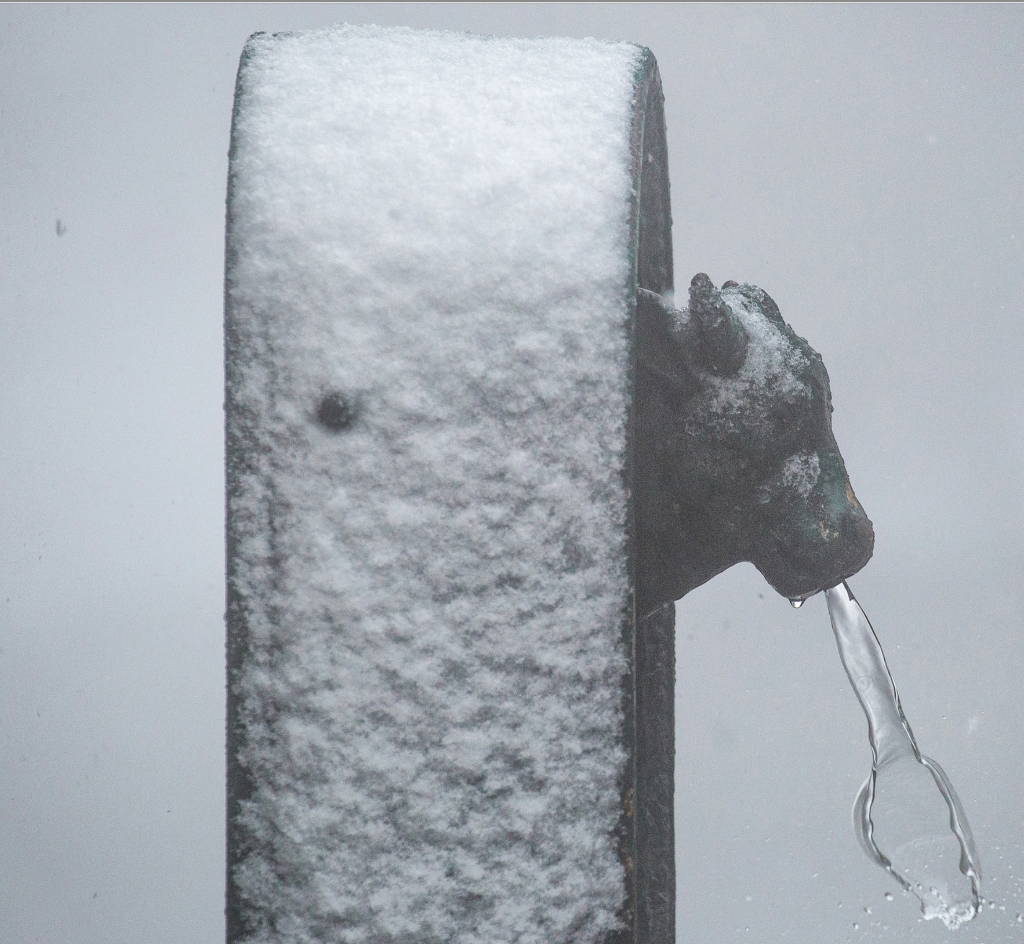
Torèt Fountains
The Torèt are Turin's iconic green public drinking fountains, easily recognisable by their bull-head spouts—a reference to the bull symbol of the city. There are over 800 scattered throughout Turin, providing fresh drinking water to residents, animals, and visitors alike thanks to small ground-level basins. They are deeply integrated into daily urban life and are considered a beloved symbol of the city. In recent years, initiatives such as "I Love Torèt" have mapped and promoted their preservation, including digital tools to locate them. These fountains represent Turin's blend of practicality, identity, and civic heritage.
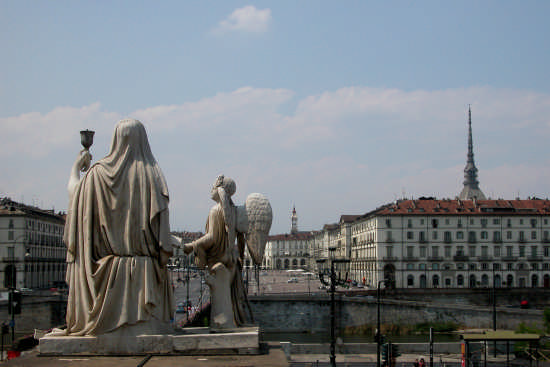
Turin and the Holy Grail
Turin is considered one of the most magical and mysterious cities in the world, serving as a vertex for both the White Magic triangle (with Prague and Lyon) and the Black Magic triangle (with London and San Francisco). According to esoteric traditions, the Holy Grail is hidden here. The Church of Gran Madre di Dio is the symbolic heart: the statue of Faith holds a cup many identify as the Grail, and legend says her gaze points toward where the chalice is hidden. The connection deepens with the Holy Shroud — many scholars argue the Grail and the Shroud are intrinsically linked as "containers" of Christ's body. Turin is also tunneled with secret passages known as Alchemical Caves, where alchemists sought the Philosopher's Stone and where the Grail may still be kept.
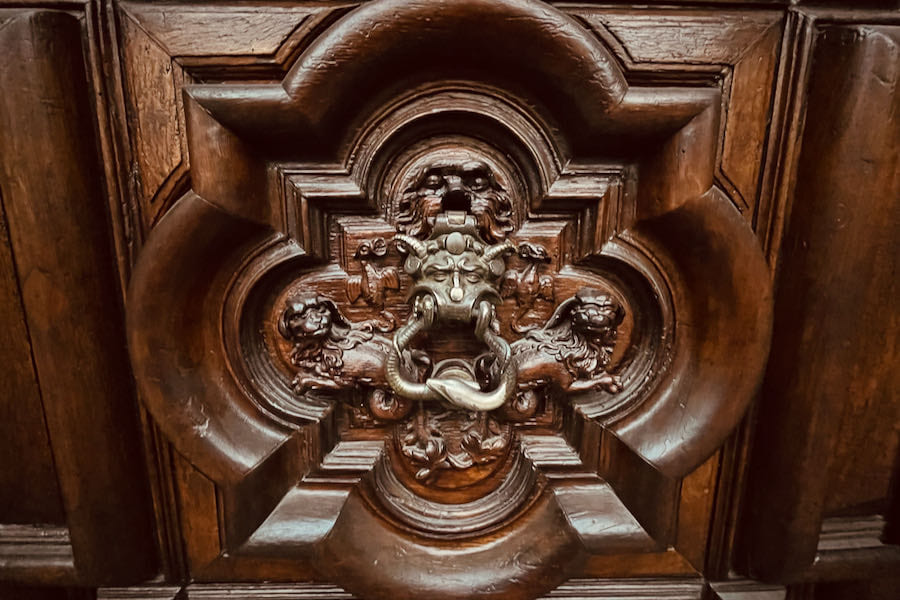
Il Portone del Diavolo
The Portone del Diavolo (The Devil's Door) is one of the most eerie symbols of Magical Turin, located at Via XX Settembre 40, entrance to Palazzo Trucchi di Levaldigi. The door gets its name from the monumental bronze central knocker installed in 1675, depicting Satan's face with horns, a wide-open mouth, and two intertwining snakes forming the ring. Local folklore claims the door appeared overnight — a sorcerer's apprentice invoked Satan to be free of his master, and the Devil trapped the apprentice inside forever. Esotericism enthusiasts note the building once bore number 15, the Tarot card of the Devil, and sits at the heart of what many call the Black Magic Triangle.
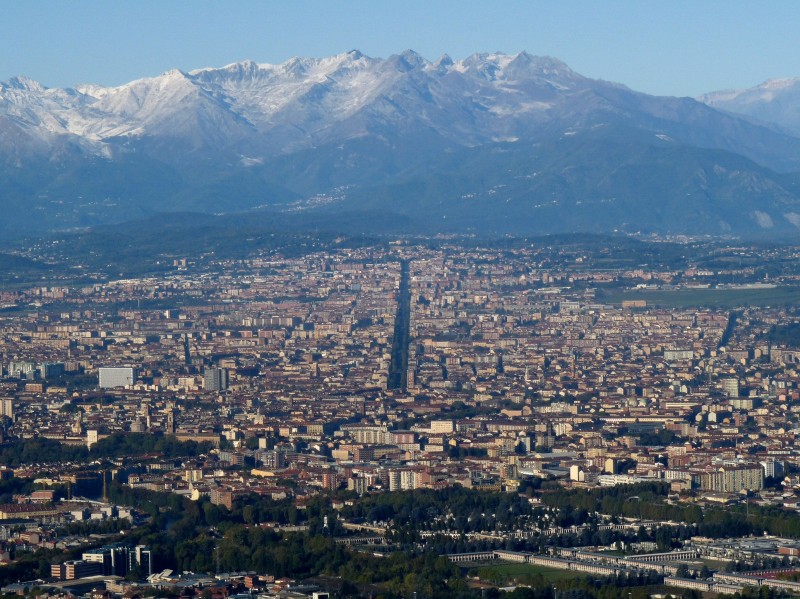
Corso Francia — Longest Urban Street in Europe
Corso Francia stretches for nearly 12 kilometres in a perfectly straight line from Piazza Statuto in Turin through Collegno and Grugliasco to the foot of the Castle of Rivoli. Originally the Royal Road to France, it served as a fast link between the capital and the Savoy residence at Rivoli, and was used for military parades and royal messengers. Its defining feature is the extraordinary straightaway — one of the longest in Europe — designed to showcase the power and elegance of the House of Savoy. On a clear day, the perspective toward the Alps and the Castle is truly breathtaking.
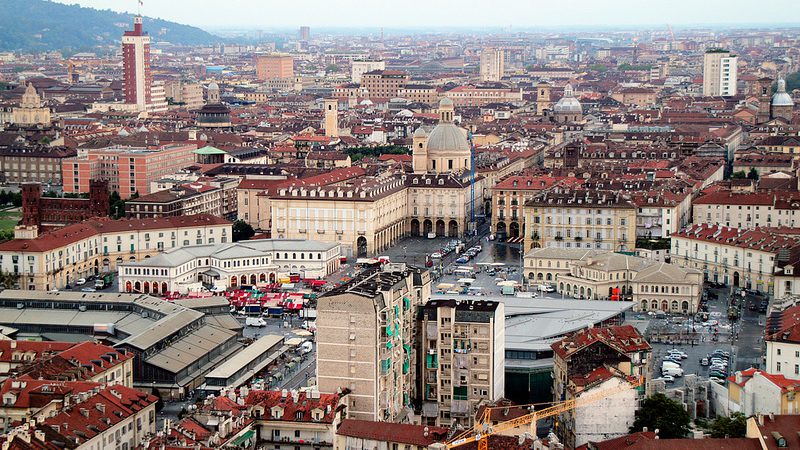
Corso Regina Margherita
Known simply as "la Regina" by locals, Corso Regina Margherita is one of Turin's most vital traffic arteries at approximately 8 kilometres long. It cuts across the city from the Po River to the suburb of Collegno and is famous for having house numbers reaching toward 600 — among the highest in Europe. The street passes through radically different worlds: the majestic historic east end, the chaotic hub of Porta Palazzo (Europe's largest open-air market), and working-class districts leading to Pellerina Park. In the right spot, looking east on a clear day, you can frame the Mole Antonelliana and the Alps together in a single breathtaking view.
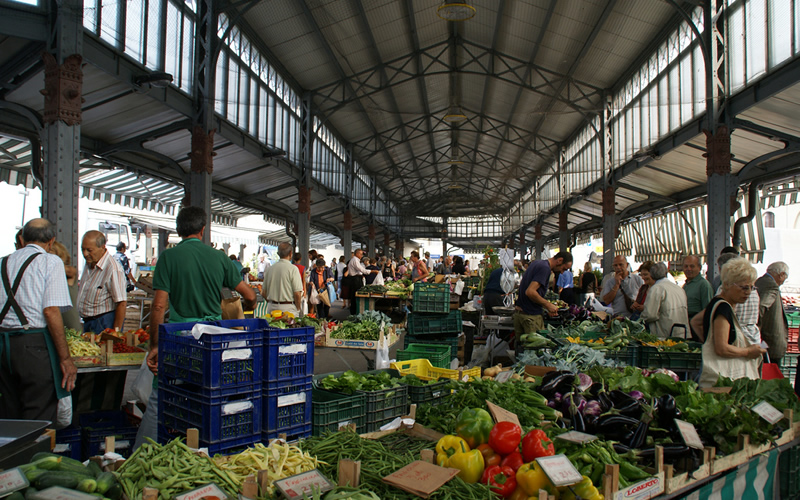
I Contadini di Porta Palazzo
Porta Palazzo is not just the largest open-air market in Europe — it is an ecosystem where city meets countryside every morning. Under the Tettoia dei Contadini (Farmers' Shed), producers arrive at dawn from the surrounding countryside to sell what they harvested just hours before. Only direct producers are allowed under the shed — the quality is exceptional, prices fair, and products strictly seasonal: Carmagnola peppers, hunchback cardoons, wild Piedmontese berries. These farmers are guardians of local traditions and forgotten flavors, a fascinating mix of deep Piedmontese dialect and new generations who have taken over local farmland.
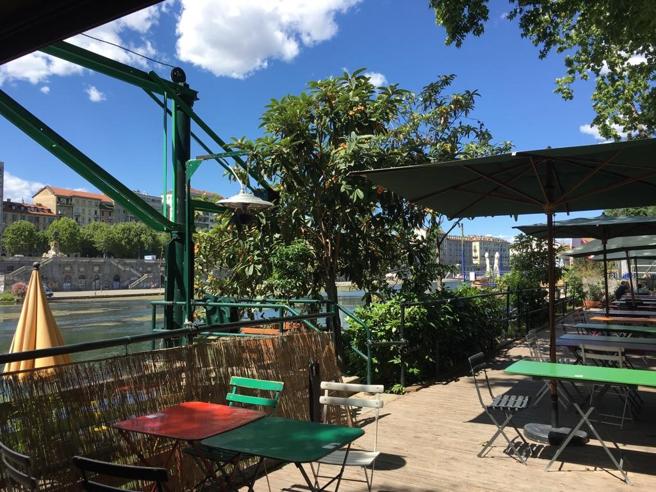
Le Bocciofile
The first bocce society in Italy was founded in Turin on May 1st, 1873. Today, bocciofile are social strongholds scattered throughout the city, representing a convivial and nostalgic side of Turin deeply rooted in local neighbourhoods. Once the exclusive domain of retirees with hats and cigars, Turin's bocce clubs are enjoying a second youth, becoming hotspots for young people, artists, and foodies. Many feature spectacular hidden courtyards along the Po or Dora rivers. Key clubs: Bocciofila Borgo Rossini (Via Mamiani 5, Vanchiglia) — a vibrant cultural hub hosting concerts and book launches. Bocciofila Mossetto (Lungo Dora Agrigento 16) — a symbol of urban social life. Bocciofila Vanchiglietta (Lungo Dora Colletta 39/a) — one of the most relaxing views in the city under vine-covered pergolas.
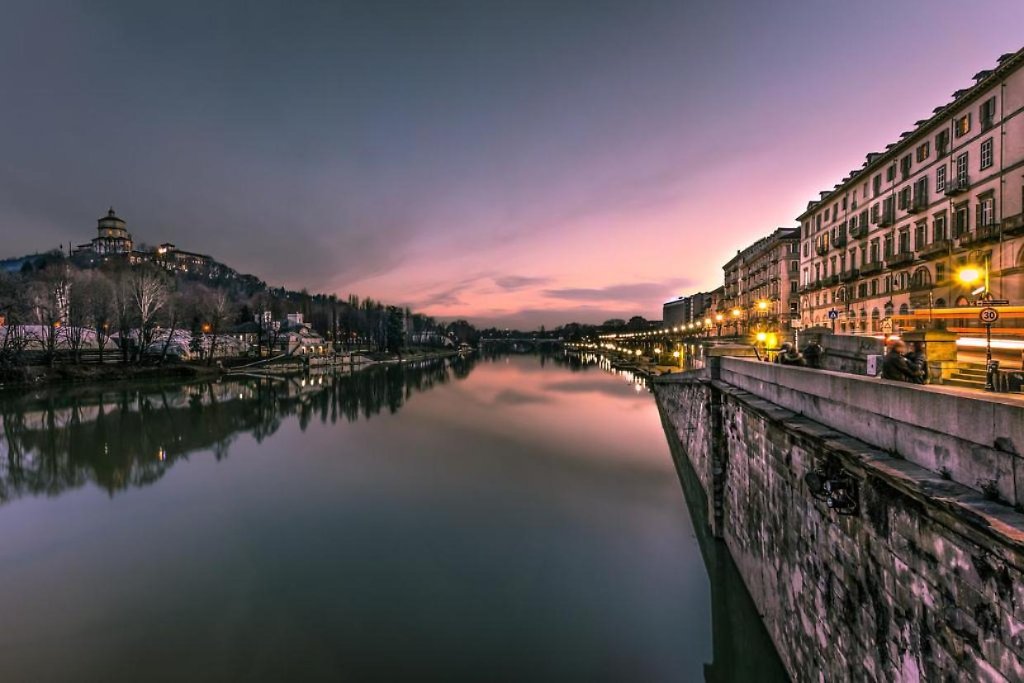
I Murazzi sul Po
The Murazzi del Po are one of Turin's most iconic locations, situated along the left bank of the Po at the foot of Piazza Vittorio Veneto. Named after the massive 19th-century stone embankments built to protect the city from flooding, they evolved into the beating heart of Turin's underground culture in the 1970s. After a long period of closure, the area has come back to life with a vibrant mix of cultural spaces and nightlife. The area is divided by the Vittorio Emanuele I Bridge: the northern side dedicated to Fred Buscaglione, the southern to Gipo Farassino. Key venues: Gianca Underground Club (electronic music), Magazzino sul Po (ARCI club with live concerts and festivals), EDIT Porto Urbano (cocktail bar and kitchen with river views).